


Medical-Grade Skincare in Fargo, ND: Clinically Formulated SkinBetter Science Products
Dr. Kristine Martens, DO, and the Resurgent Health team select physician-grade products for your skin type rather than sending you home with the whole line.
Table of Contents
Why Over-the-Counter Skincare Falls Short vs Medical-Grade Skincare
Concentration, formulation, and fit
Most drugstore and department-store products cap their active ingredient concentrations low so they can sell to everyone. That is fine for basic hydration, but it is often why patients feel like their skincare is not doing much for stubborn wrinkles, brown patches, or sun-damaged texture. Retinol at 0.01 percent, vitamin C in an unstable form, or a nice-smelling moisturizer without proven actives will not move the needle on real skin change. Buying without guidance also means layering products that overlap or cancel each other out.
SkinBetter Science formulates its cleansers, treatments, and sunscreens with higher, physician-supervised active concentrations, better stabilization systems, and clinical testing behind each product. Our team selects the right pieces for your skin type and concerns rather than sending you home with the entire line. A typical routine is 3 to 5 products: cleanser, treatment serum, moisturizer, and sunscreen. It is straightforward to follow and works alongside microneedling in Fargo, ND and dermaplaning for compounding results.
What Is Medical-Grade Skincare And How It Works
Medical-grade skincare (also called physician-dispensed or cosmeceutical skincare) refers to topical products sold only through licensed medical providers. These formulas carry higher, clinically tested concentrations of active ingredients - retinoids, vitamin C, alpha hydroxy acids, peptides, and growth factors - than drugstore or department-store brands can offer.
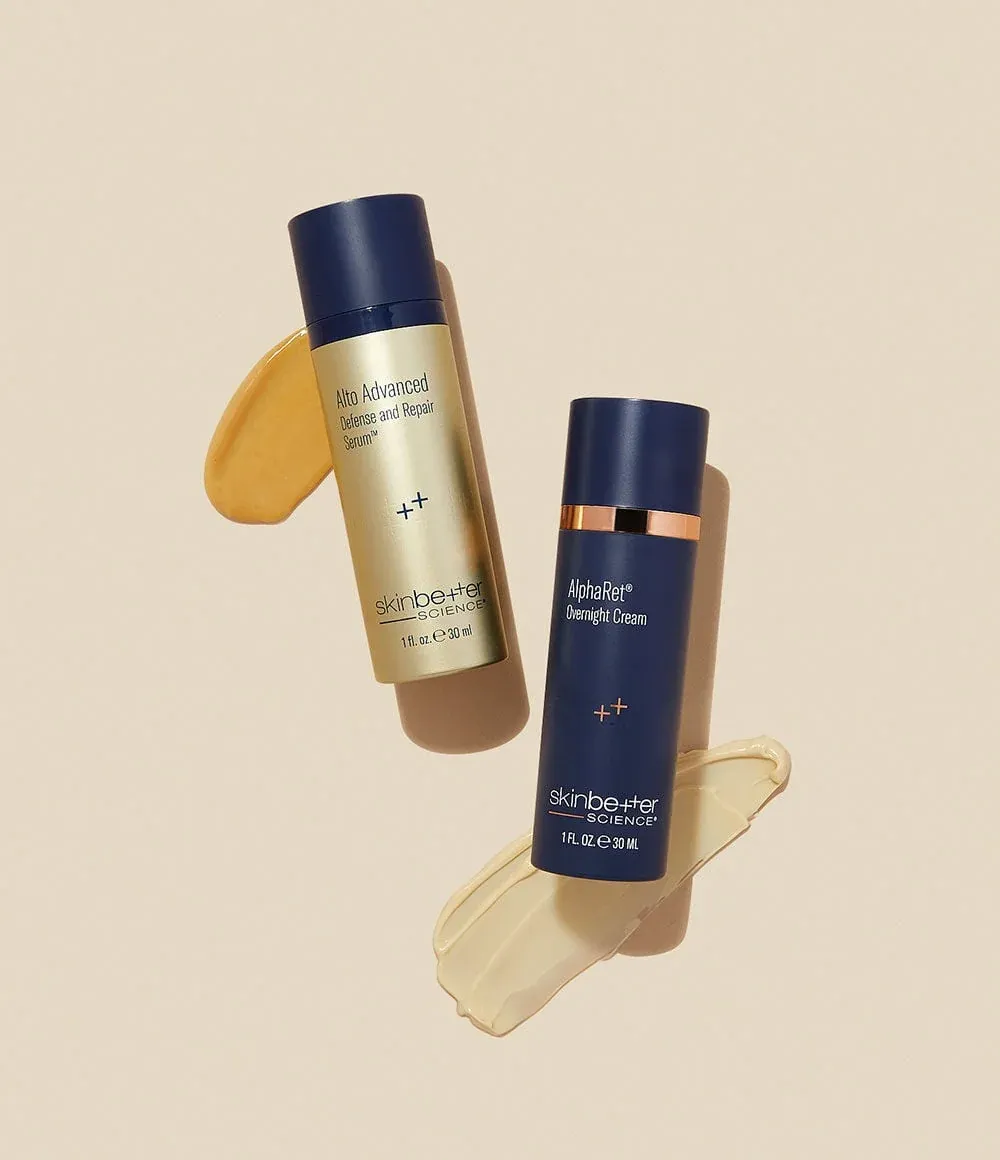
Resurgent Health carries SkinBetter Science, developed by industry chemists and dermatology advisors; its AlphaRet formula pairs a retinoid and lactic acid in one molecule for smoother tolerance. As the American Academy of Dermatology notes, ingredient concentration and pairing - not the brand name - determine real results. A short consult matches your skin type, sensitivity, and top concern to a targeted routine, and you leave with three to five products and clear morning and evening instructions.
Treatment Timeline:
Consult Time:
15 - 30 minutes (skin assessment and routine build)
First Changes:
4 - 8 weeks (with consistent daily use)
Full Turnover:
12 weeks (one full skin-cell cycle)
Follow-Up:
4 - 6 weeks (to fine-tune the regimen)
Skin Concerns Medical-Grade Skincare Addresses

Benefits of a Medical-Grade Routine
Build an effective skincare routine with physician-selected products designed to target your unique concerns and support healthier, more radiant skin
Formulation
Higher concentrations and clinical testing
Products
We pick the right products for your skin
In-Office Care
Works with microneedling and dermaplaning
Targeted
Routine built around aging, tone, sun damage
Subscription
Refill at your own pace, no monthly commitment
Medical-Grade Skincare vs Alternatives
How the categories compare
| Product Category | Active Concentration | Formulation Testing | Guidance Included | Typical Cost | Best For | Where to Buy |
|---|---|---|---|---|---|---|
| Medical-Grade (SkinBetter) | Higher, physician-supervised | Clinical testing on the finished product | Provider consult and follow-up | Moderate to premium | Aging, tone, sun damage, texture | Physician office only |
| Drugstore Skincare | Low, capped for mass safety | Ingredient-level, not always finished product | None | Low | Basic hydration and cleansing | Retail and grocery |
| Department-Store Brands | Variable, often low actives | Marketing-driven, not always clinical | Sales associate, not clinical | Premium (brand markup) | Luxury feel, mixed results | Department stores, online |
| Prescription-Only Actives | High (tretinoin, hydroquinone) | FDA-regulated as drugs | Prescribing provider | Low with insurance | Specific medical use cases | Pharmacy with Rx |
| Unbranded Compounded Products | Variable by pharmacy | Not standardized | Depends on prescriber | Low to moderate | Custom Rx blends | Compounding pharmacy |
Who Is a Good Candidate for Medical-Grade Skincare?
Medical-grade skincare works for most adults who want a home routine that actually moves the needle. A short consult with our team helps us match your skin type, current products, and goals to the right SkinBetter formulations.
Ideal Candidates for Medical-Grade Skincare
- Adults ready to commit to a daily routine for at least 12 weeks
- Patients who feel their drugstore products have plateaued
- Anyone pairing home care with microneedling or dermaplaning
Who Should Wait or Adjust
- Active skin infections or open lesions in the treatment area
- Pregnant or breastfeeding patients should avoid retinoid options
- Very reactive or rosacea-prone skin needs a gentler, slower ramp
Honest Expectations About Results
- More potent than drugstore products, but results need consistent daily use
- Most see improved tone and texture within six to twelve weeks
- Daily SPF is non-negotiable, or results fade quickly
If you are not sure whether medical-grade skincare is right for you, ask at your next visit. We would rather send you home with two right products than five wrong ones.
The Skincare Consult Process
From consult to routine
Skin Consult
Skin Type Assessment
Routine Built
Application Training
Follow-Up Check-In

Side Effects and Safety
Medical-grade skincare is generally well tolerated, but higher active concentrations mean higher chances of an initial adjustment period. The most common side effects are temporary and resolve as your skin builds tolerance.
Common, Usually Temporary
- Mild redness or flushing for the first 1 to 2 weeks
- Light peeling or flaking (especially with retinoid products)
- Slight tingling on application
- Increased sun sensitivity, which is why daily SPF is non-negotiable
Less Common, Contact Us
- Persistent burning or stinging beyond the first few uses
- New or worsening breakouts after 6 weeks
- Any allergic-type reaction: swelling, hives, or spreading rash
If you have questions about a reaction, call the office. According to the American Academy of Dermatology, adjusting frequency (every other night rather than nightly, for example) resolves most retinoid-related irritation. We will guide you through it.
Cost of Medical-Grade Skincare in Fargo, ND
Transparent product pricing
SkinBetter Science products are priced individually, and you buy only what your provider recommends. A typical starter routine of 3 to 5 products runs about $150 to $500, depending on which cleanser, treatment serum, moisturizer, and sunscreen you take home. Individual products are refilled as you run out, not on a monthly subscription.
What You Can Expect to Pay
- Cleanser: about $45 to $70
- Treatment serum (retinoid, vitamin C, or brightening): about $110 to $170
- Moisturizer: about $80 to $130
- Sunscreen: about $60 to $80
- Full 4-product starter routine: about $300 to $450
Prices are set by SkinBetter Science and reviewed regularly. Ask our team for the current price sheet during your consult. The skincare consult itself is included at no extra charge for Resurgent Health patients.
Why Choose Resurgent Health for Medical-Grade Skincare in Fargo, ND
Dr. Kristine Martens, DO, and the Resurgent Health team practice medicine the same way we sell skincare: honest, unhurried, and matched to you. As North Dakota's first Direct Primary Care clinic, we do not stack appointments or push products. Your consult includes time to actually look at your skin and build a routine you will use.
Physician-Led Curation
Every routine is reviewed by our medical team before you take products home.
Honest, Not Salesy
We recommend 3-5 products, not the full line. If you do not need it, we say so.
Works With In-Office Treatments
Skincare is paired with microneedling and dermaplaning for compounding results.
Follow-Up Included
A 4 to 6 week check-in to see how your skin is responding and adjust as needed.
Consult Included
Your skin consult is free with your visit, whether or not you buy anything.
Clinically Tested
SkinBetter Science products are backed by clinical testing
Related Services in Fargo, ND
Home skincare works best alongside in-office aesthetic care.
Microneedling
Automated microneedling with sterile single-use cartridges, delivered by our trained clinical team under physician oversight.
- Adults with atrophic acne scars they want to soften
- Patients bothered by fine lines, texture, or enlarged pores
- Skin with mild to moderate sun damage or dullness
Dermaplaning
A physician-led facial treatment that removes dead skin and peach fuzz in about 30 minutes, with zero downtime.
- Adults wanting smoother, brighter skin with no downtime
- Patients prepping for a wedding, photoshoot, or special event
- Anyone bothered by facial peach fuzz that traps makeup or oil
Emsculpt Neo Body Contouring
Non-invasive BTL Emsculpt Neo combining HIFEM muscle contractions with radiofrequency fat reduction.
- Adults with a BMI under 30 who are close to their goal weight
- Those wanting muscle definition or fat reduction beyond training alone
- Post-partum patients (3+ months, OB-cleared) or plateaued athletes
Medical-Grade Skincare FAQ
What is the difference between medical-grade skincare and what I buy at the drugstore?
Medical-grade products use higher active concentrations, better stabilization systems, and clinical testing on the finished formula. Drugstore lines cap actives low so they can sell to everyone.
Do I have to buy the whole SkinBetter line?
No. Our team picks 3 to 5 products that match your skin type and top concerns. Most patients leave with a cleanser, treatment serum, moisturizer, and sunscreen.
How long before I see results?
Most patients notice smoother texture and more even tone within 4 to 8 weeks of daily use. Full skin turnover takes about 12 weeks, so give any new routine a fair 3-month trial.
Can I use these products if I am pregnant?
Some SkinBetter products contain retinoids that are not recommended during pregnancy or breastfeeding. Tell our team, and we will build a pregnancy-safe routine focused on vitamin C, ceramides, and mineral SPF.
Do medical-grade products work with microneedling and dermaplaning?
Yes. Home care compounds the effect of in-office treatments. Many patients pair a medical-grade routine with quarterly microneedling or monthly dermaplaning for stronger, faster results.
Is there a subscription?
No. You buy what you need when you need it. Refill at your own pace and swap products at follow-up if your skin changes with the seasons.
Does insurance cover this?
No. Medical-grade skincare is a cosmetic product, not a covered medical treatment. Prices are set by SkinBetter Science and are the same at every physician office that carries the line.
Contact Us Today
Send us a message for more information - DPC membership, a discovery call, or any other service you'd like to ask about.
References
- PubMed (PMID: 18046911). Mukherjee S, et al. Retinoids in the treatment of skin aging: an overview of clinical efficacy and safety. Clinical Interventions in Aging, 2006. Retinoid therapy remains a mainstay of topical photoaging treatment.
- PubMed (PMID: 29104718). Al-Niaimi F, Chiang NYZ. Topical Vitamin C and the Skin: Mechanisms of Action and Clinical Applications. Journal of Clinical and Aesthetic Dermatology, 2017. Vitamin C serums support collagen synthesis and reduce photodamage.
- PubMed (PMID: 23732711). Hughes MCB, et al. Sunscreen and prevention of skin aging: a randomized trial. Annals of Internal Medicine, 2013. Daily sunscreen use slowed skin aging by 24 percent over 4.5 years.
- PubMed (PMID: 21437068). Kornhauser A, et al. Applications of hydroxy acids: classification, mechanisms, and photoactivity. Clinical, Cosmetic and Investigational Dermatology, 2010. Alpha hydroxy acids improve skin surface texture and pigmentation.
- PubMed (PMID: 16029672). Farris PK. Topical vitamin C: a useful agent for treating photoaging and other dermatologic conditions. Dermatologic Surgery, 2005. Reviews clinical evidence for vitamin C in daily skincare.