

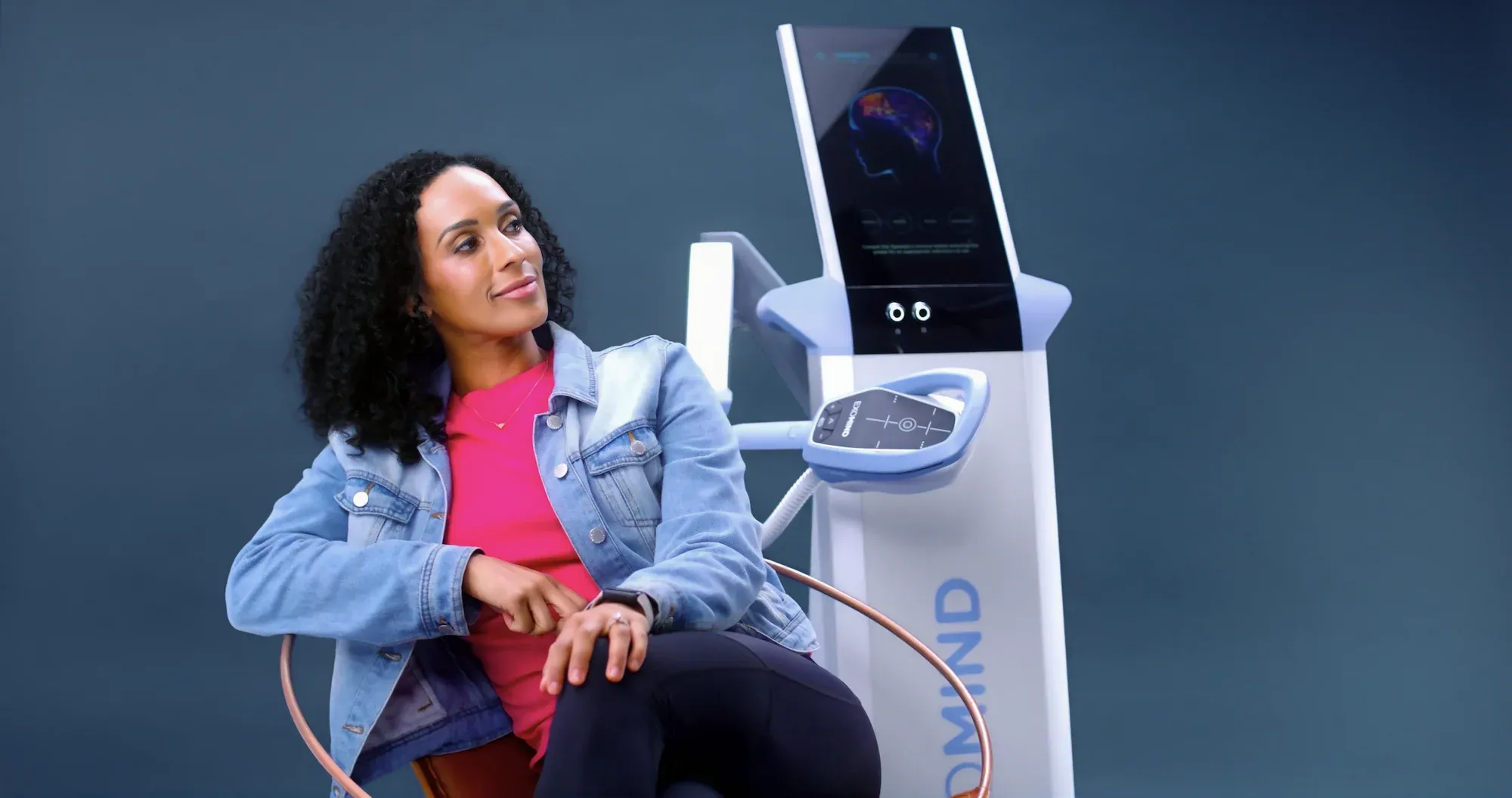
TMS Therapy with Exomind in Fargo, ND: Non-Invasive Neurostimulation for Focus, Mental Clarity, and Emotional Balance
At Resurgent Health, Dr. Kristine Martens, DO is a Board-Certified Family Medicine physician who has practiced in Fargo since 2013 and co-founded North Dakota's first Direct Primary Care clinic. She personally screens every Exomind candidate, coordinates with your psychiatrist or primary care team when appropriate, sets honest expectations, and frames Exomind as a wellness complement to, not a replacement for, mental health care.
Table of Contents
When Brain Fog and Mental Fatigue Call for TMS Therapy
Understanding Cognitive Wellness
Many patients tell us the same story: they sleep enough, they eat reasonably well, and yet their thinking feels slow, cloudy, or scattered. Working mothers describe forgetting names mid-sentence. Ranchers and shift workers notice that focus drifts before lunch. Perimenopausal and postmenopausal women in Fargo describe a fog that appeared with hormonal changes and has not lifted. Retirees worry that everyday word-finding trouble is something bigger. Coffee, calendar apps, and pushing through the day only go so far, and traditional cognitive training apps rarely make a lasting dent.
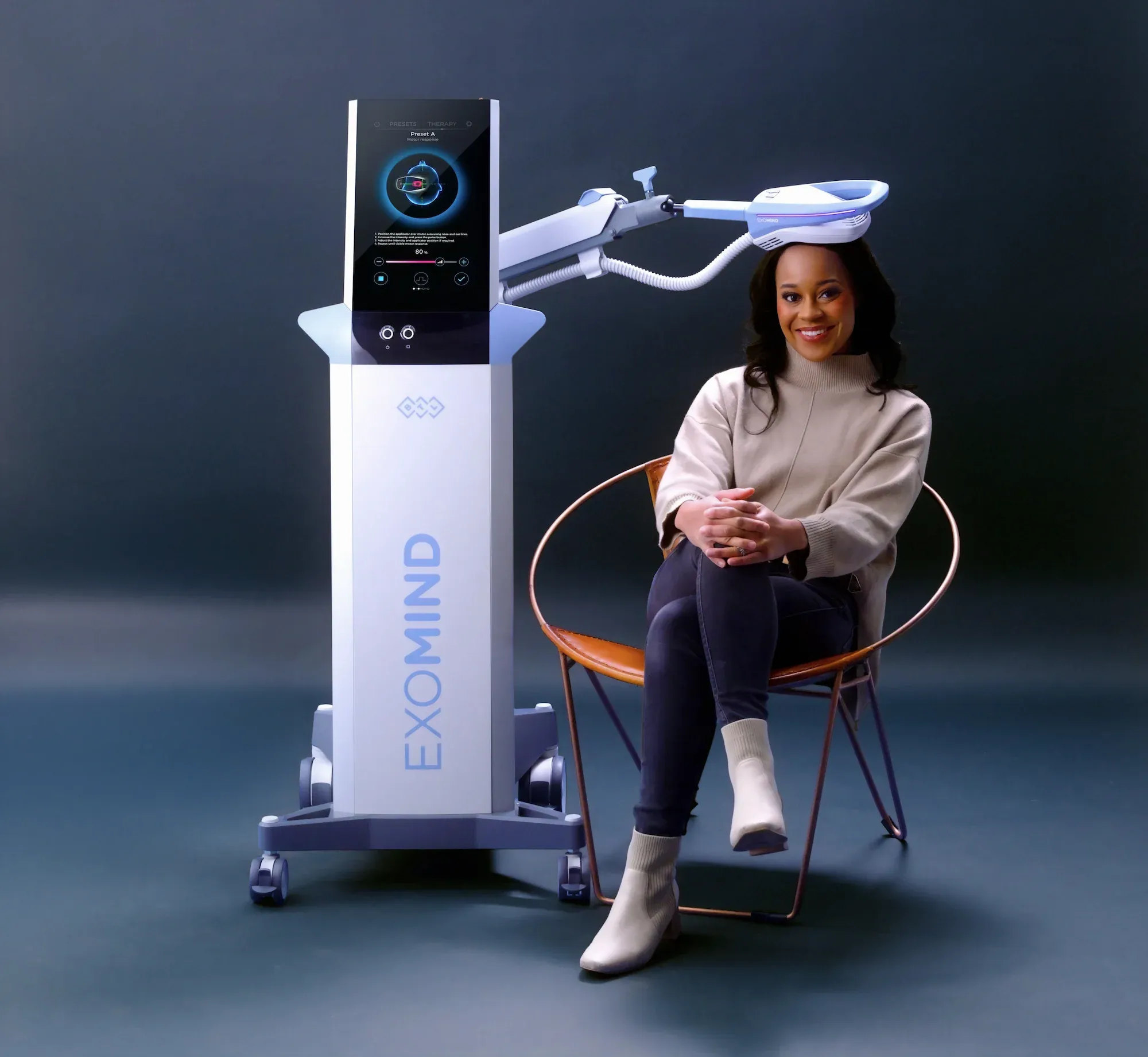
TMS therapy with Exomind takes a different approach. In a seated 20-minute session, a coil placed over the left dorsolateral prefrontal cortex delivers High-Intensity Focused Electromagnetic Stimulation (HIFES) to the same brain region that clinical deep TMS targets for cognition and mood regulation. Exomind is FDA-cleared for wellness use, not as a psychiatric treatment. It does not replace medication or therapy, but for otherwise healthy adults or those already stable under a psychiatrist's care, it can support focus, mental clarity, and emotional balance alongside sleep, movement, and nutrition work.
What Is TMS Therapy with Exomind And How It Works
Exomind is a non-invasive neurostimulation device that delivers High-Intensity Focused Electromagnetic Stimulation (HIFES) to the left dorsolateral prefrontal cortex, the region tied to focus, executive function, and mood regulation. It is FDA-cleared for wellness use to support cognitive performance and emotional balance; it is not a psychiatric treatment and does not replace care with a psychiatrist.
The coil sits over the scalp and delivers pulsed fields that induce small, focused currents in the underlying cortex - the same anatomic target used by clinical deep-TMS systems. Data indexed at the National Library of Medicine show repeated stimulation of this region can measurably influence attention and working memory in healthy adults. You sit fully clothed for a 20-minute session with no needles or sedation, drive yourself home, and resume normal activities immediately.
Treatment Timeline:
Session Duration:
20 minutes (seated, fully clothed)
Full Protocol:
6 - 8 sessions (over 4 - 6 weeks)
Frequency:
1 - 2 per week (spaced sessions)
Recovery:
None (drive home, resume activities)
TMS Therapy with Exomind Focus Areas

Benefits of TMS Therapy with Exomind
Improve focus and mental performance with advanced neurostimulation designed to support brain function while allowing you to return to your daily routine immediately
Non-Invasive
No needles, no anesthesia
No Downtime
Return to normal activities immediately
Drug-Free
No daily prescription required
Short Sessions
20 minutes per visit, fits a workday
Focused Targeting
Coil placed over left dlPFC, the region tied to focus and mood
TMS Therapy with Exomind vs. Alternatives
Compare Your Options
| Treatment | Mechanism | Time | Results | Duration | Downtime | Best For |
|---|---|---|---|---|---|---|
| Exomind (Resurgent Health) | HIFES to left dlPFC | 20 min per session | Focus and clarity support | 6 to 8 sessions | None | Cognitive wellness in healthy adults |
| Psychiatric medication | Neurotransmitter modulation | Daily oral dose | Symptom control | Ongoing | Possible side effects | Diagnosed mood and anxiety disorders |
| Clinical deep TMS clinics | Repetitive TMS to dlPFC | 20 to 40 min sessions | MDD symptom reduction | 6 week protocol | None | Treatment-resistant depression |
| Psychotherapy | Cognitive and behavioral work | 45 to 60 min weekly | Skill and insight building | Months to years | None | Talk-based mental health care |
| Cognitive training apps | Repetitive exercises | 10 to 20 min daily | Task-specific gains | Ongoing | None | At-home cognitive practice |
Who Is a Good Candidate for TMS Therapy with Exomind?
Exomind is designed for otherwise healthy adults, or for adults whose diagnosed mental health conditions are already being managed by a psychiatrist, who want a non-invasive, drug-free way to support focus, mental clarity, and emotional balance. It is a wellness complement, not a replacement for psychiatric care.
Ideal Candidates for TMS Therapy with Exomind
- Adults noticing brain fog, mental fatigue, or slowed thinking
- Working adults, parents, or students who want focus support
- Patients stable under a psychiatrist’s care wanting an added input
Who Should Wait or Avoid TMS Therapy with Exomind
- Implanted electronic or magnetic devices in the head or neck
- Personal or family history of seizure or epilepsy, or pregnancy
- Active psychiatric emergency, or a diagnosis not managed by a psychiatrist
Honest Expectations About Results
- A wellness complement for focus and clarity, not psychiatric treatment
- Most notice the clearest change after completing a session series
- Benefits build gradually, supported by sleep, movement, and stress care
If you have a diagnosed mental health condition, please continue working with your psychiatrist. Exomind is not a replacement for medication, therapy, or clinical deep TMS. Dr. Martens will screen you carefully and, when appropriate, coordinate directly with your mental health team before starting a series. For patients whose fog is driven by tension, poor posture, or musculoskeletal strain, we also offer osteopathic manipulative therapy as a complementary option.
What Happens During TMS Therapy with Exomind Treatment
Step-by-Step Process
Consult and Screen
Seat and Position
HIFES Session
Schedule Next Visit
Series Review
Risks and Side Effects
What to Know
Common TMS Therapy with Exomind Side Effects
Most patients tolerate Exomind well. The most common side effects are mild scalp discomfort under the coil, a light tapping sensation during the session, and a brief headache afterward. These typically resolve within an hour and often improve session over session as you acclimate.
Rare Complications
As with any transcranial magnetic stimulation device, there is a small theoretical risk of seizure, most often in patients with a personal or family history of epilepsy, active substance withdrawal, or certain medications that lower seizure threshold. Published incidence in clinical TMS populations is well under 1 percent. Dr. Martens screens carefully for these risk factors before clearing you for a series.
Safety, FDA Status, and Scope
Exomind is FDA-cleared for wellness use and is manufactured by BTL Aesthetics. It is not a treatment for depression, anxiety, PTSD, bipolar disorder, or any other diagnosed psychiatric condition, and it is not a replacement for medication, therapy, or clinical deep TMS provided by a psychiatric TMS center. For more on TMS safety and clinical use, the National Institute of Mental Health maintains a public overview of brain stimulation therapies. If you develop new or worsening mood symptoms, thoughts of self-harm, or any acute psychiatric symptom during your Exomind series, stop the sessions and contact your psychiatrist or call 988.
TMS Therapy with Exomind Cost in Fargo
Pricing and Payment Options
Exomind is a wellness service and is not covered by insurance. In the Fargo, Moorhead, and West Fargo market, Exomind sessions typically run in the $250 to $450 per-session range depending on the practice, with 6 to 8 session packages priced at a modest discount. Exact pricing at Resurgent Health will be discussed during your consultation with Dr. Martens based on your goals, current care team, and whether a package or single-session plan is more appropriate. Because Exomind is a physician-supervised wellness service, your fee includes the medical screen, coil positioning, and post-series review, not just the device time. Existing Direct Primary Care members can also discuss how Exomind sessions fit alongside their wellness care with Dr. Martens.
Flexible Payment Options
We accept cash, check, and major credit and debit cards at the time of service. Resurgent Health does not bill insurance for wellness services. If session-by-session pricing works better than a package for your budget, we are happy to book one session at a time.
Why Choose Resurgent Health for TMS Therapy with Exomind in Fargo
Dr. Kristine Martens, DO brings more than a decade of Board-Certified Family Medicine practice in Fargo and a whole-person view to every Exomind consultation. She personally screens candidates and coordinates with your psychiatrist when relevant, so Exomind fits into, rather than replaces, your mental health care.
Physician Oversight
Every Exomind candidate is personally screened and cleared by Dr. Martens
Honest Framing
Positioned as wellness support, not a replacement for psychiatric care
Integrated Care
Coordinated with your psychiatrist or primary care team when appropriate
FDA-Cleared Device
BTL Exomind, targeting the same dlPFC region as clinical deep TMS
No Downtime
Return to work and daily activities immediately after each session
Guided Every Step
Questions are answered throughout your treatment by our clinical team
Related Services in Fargo, ND
Complement your Exomind sessions with these Resurgent Health services.
Core Strengthening with Emsculpt Neo
Non-invasive HIFEM training for the deep core, pelvic floor, and glutes.
- Adults with chronic low back pain who cannot tolerate loaded core work
- Post-partum patients rebuilding deep core and pelvic floor (OB-cleared)
- Older adults or desk workers seeking non-invasive stability support
Myofascial Release
Gentle Hands-On Fascial Care
- Adults with chronic muscle tension or myofascial pain
- Recovery from strains, sprains, or repetitive-use injuries
- Low-back pain, hip stiffness, or neck and upper-back tension
Muscle Energy Technique
Active, Gentle Stretching for Joint Motion
- Adults with joint restriction in the neck, back, or pelvis
- Muscle guarding after a strain, or recovery needing low-force care
- Older adults wanting gentle mobility without high-velocity thrusts
Frequently Asked Questions About TMS Therapy with Exomind
Is Exomind the same as clinical TMS for depression?
No. Exomind targets the same left dorsolateral prefrontal cortex region, but it is FDA-cleared for wellness use, not as a treatment for depression, anxiety, or other psychiatric conditions. It is not a replacement for psychiatric care.
Can Exomind replace my antidepressant or my therapy?
No. If you have a diagnosed mental health condition, please continue working with your psychiatrist and therapist. Exomind is a complement to, not a replacement for, psychiatric care, and Dr. Martens will coordinate with your team when appropriate.
Does Exomind hurt?
Most patients feel a light tapping or tingling sensation on the scalp during the 20 minute session. It is not painful. A brief mild headache after the first session or two is common and usually goes away within an hour.
How many sessions will I need?
The typical Exomind protocol is 6 to 8 sessions delivered 1 to 2 times per week over 4 to 6 weeks. Dr. Martens will personalize the plan during your consultation.
Can I combine Exomind with other services at Resurgent Health?
Yes. Many patients pair Exomind with osteopathic manipulative therapy, core strengthening with Emsculpt Neo, or ongoing Direct Primary Care visits. Dr. Martens will help you sequence care in a way that fits your goals.
Is Exomind covered by insurance?
No. Exomind is a wellness service and is not billed to insurance. We accept cash, check, and major credit and debit cards at the time of service.
Am I a good candidate?
Ideal candidates are adults with brain fog, mental fatigue, or a wish for focus and emotional balance support who do not have implanted head devices, a seizure history, pregnancy, or an active psychiatric emergency. Dr. Martens will screen you carefully.
Will I need to keep coming back after the series?
Some patients feel that a single 6 to 8 session series is enough, while others choose periodic maintenance sessions. Dr. Martens will review your response at the end of the series and recommend a follow-up plan.
Contact Us Today
Send us a message for more information - DPC membership, a discovery call, or any other service you'd like to ask about.
References
- PubMed (PMID: 31359968) - Chail A, Saini RK, Bhat PS, Srivastava K, Chauhan V. Transcranial magnetic stimulation: A review of its evolution and current applications. Ind Psychiatry J. 2018.
- PubMed (PMID: 24514153) - Brunoni AR, Vanderhasselt MA. Working memory improvement with non-invasive brain stimulation of the dorsolateral prefrontal cortex: a systematic review and meta-analysis. Brain Cogn. 2014.
- PubMed (PMID: 19859782) - Guse B, Falkai P, Wobrock T. Cognitive effects of high-frequency repetitive transcranial magnetic stimulation: a systematic review. J Neural Transm. 2010.
- PubMed (PMID: 27090022) - Perera T, George MS, Grammer G, Janicak PG, Pascual-Leone A, Wirecki TS. The Clinical TMS Society Consensus Review and Treatment Recommendations for TMS Therapy for Major Depressive Disorder. Brain Stimul. 2016.
- FDA - U.S. Food and Drug Administration overview of medical devices and cleared indications for transcranial magnetic stimulation systems.
- National Institute of Mental Health - NIMH public overview of transcranial magnetic stimulation and other brain stimulation therapies.