

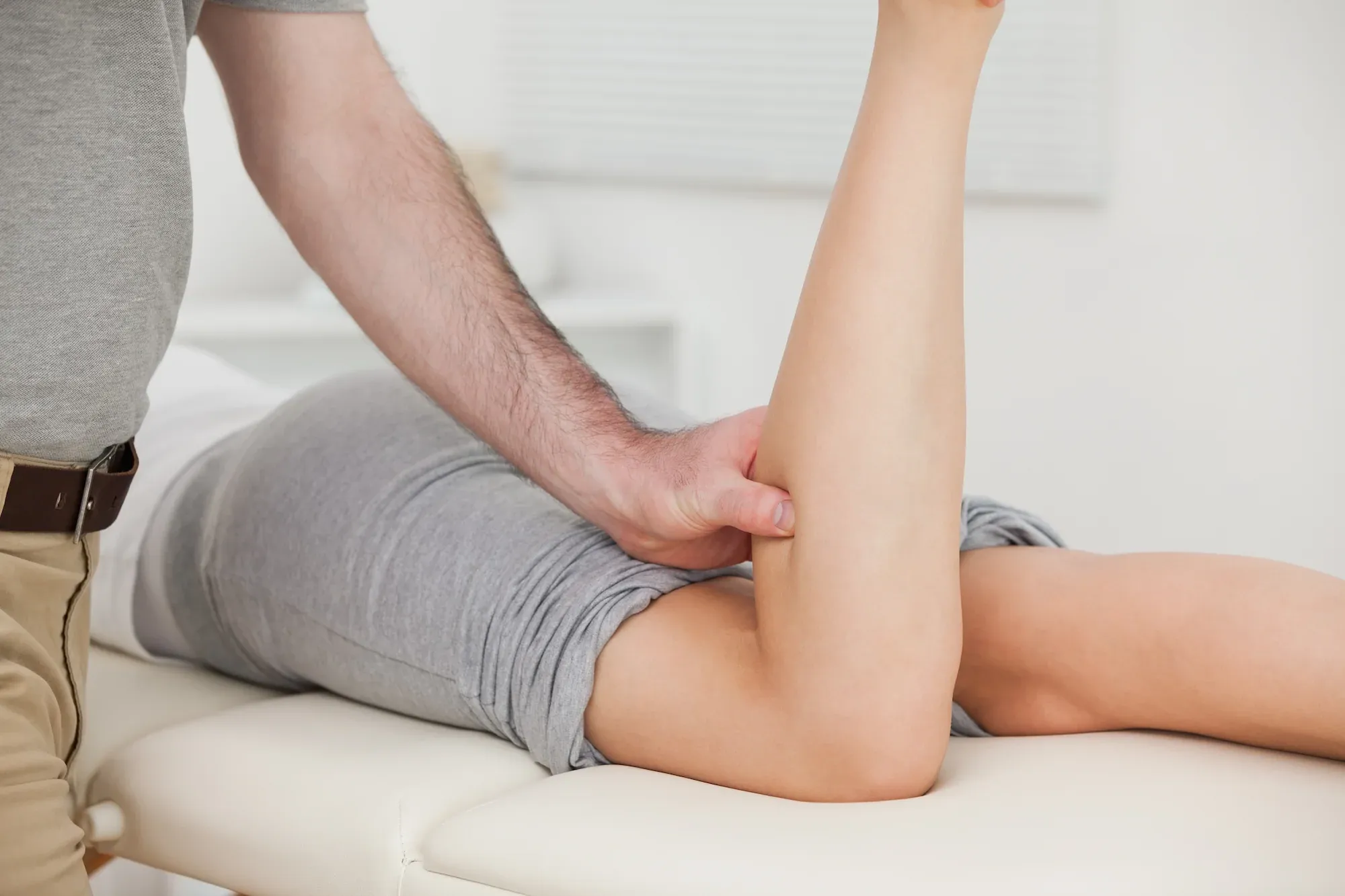
Muscle Energy Technique in Fargo, ND
At Resurgent Health, Dr. Kristine Martens, DO is a board-certified family physician and osteopathic manipulation practitioner. She has cared for Fargo families since 2013 and gives every osteopathic visit an unhurried 30 to 45 minute slot so your treatment can be precise, comfortable, and truly personalized.
Table of Contents

How Muscle Energy Technique Restores Everyday Motion
From locked joints to easy movement
When a joint stops moving through its full range, the surrounding muscles guard, tighten, and shorten. Over time, that pattern feels like a stiff neck that will not turn to check a blind spot, a low back that refuses to bend, or a hip that clicks and catches during the first steps out of bed. Ice, ibuprofen, and passive stretching may briefly ease the ache, but they rarely retrain the joint or the muscles that hold it. The stiffness comes back the next morning, and often a little worse than before.
Muscle energy technique addresses both sides of the problem in one visit. Dr. Martens identifies the exact segment that is restricted, positions you at the motion barrier, and asks you to contract a targeted muscle at 20 to 30 percent effort against her firm but comfortable resistance. When you relax, that muscle lets go through post-isometric relaxation, and Dr. Martens guides the joint to a new, freer barrier. The cycle repeats a few times per segment. Range of motion opens, guarding calms, and daily motion feels easier for most patients within the same session.
What Is Muscle Energy Technique And How It Works
Muscle energy technique (MET) is an active form of osteopathic manipulative treatment in which you contract a specific muscle in a precisely controlled direction against Dr. Martens's counterforce, from a precisely controlled position. Unlike passive massage or a chiropractic thrust, MET is a partnership: you supply the effort, she supplies the position, and the joint regains motion through your own neuromuscular system.
It relies on two reflexes documented in the National Library of Medicine: post-isometric relaxation, where a brief submaximal contraction lets a muscle relax past its resting tone, and reciprocal inhibition, where contracting the opposing muscle relaxes the tight one. She positions you at the motion barrier, asks for a gentle 20 to 30 percent effort held three to five seconds, then engages the new barrier, repeating a few times per segment until range improves.
Treatment Timeline:
Session Length:
30 - 45 minutes (active, patient-assisted)
First Relief:
Same day (more range by end of visit)
Full Response:
2 - 6 sessions (for chronic restriction)
Downtime:
None (return to activity right away)
Muscle Energy Technique Treatment Areas

Benefits of Muscle Energy Technique
By combining precise positioning with gentle muscle contractions, Muscle Energy Technique helps improve flexibility, relieve pain, and restore healthy movement
Gentle
No cracking, only your own light contractions
Participation
Makes results more predictable and repeatable
Safe
Well tolerated by working adults and post-injury patients.
Zero Downtime
Return to work, driving, and family life the same day.
Physician Delivered
Performed and adjusted in real time by a Doctor of Osteopathic Medicine.
Muscle Energy Technique vs Alternatives
Compare Your Options
| Treatment | Mechanism | Time | Results | Duration | Downtime | Best For |
|---|---|---|---|---|---|---|
| Muscle Energy Technique (DO) | Active isometric contraction plus barrier release | 30-45 min | Same-day motion gains | Weeks per session with home work | None | Joint restriction, segmental dysfunction, muscle hypertonicity |
| Physical Therapy Stretching | Progressive passive and active stretching | 45-60 min | Gradual functional gains | Long-term with home program | None | Rehab after injury or surgery |
| Chiropractic Adjustment | High-velocity low-amplitude thrust | 10-20 min | Immediate joint mobilization | Days to weeks | None to mild soreness | Isolated vertebral joint restriction |
| Massage Therapy | Muscle kneading and relaxation | 60 min | Immediate relaxation | Days | None | General muscle tension and stress |
| Self-Directed Stretching | Voluntary passive stretch at home | 10-15 min | Short-term looseness | Hours | None | Maintenance between visits |
Who Is a Good Candidate for Muscle Energy Technique?
Muscle energy technique is well suited to most adults who have joint restriction, spinal segmental dysfunction, or muscle hypertonicity that has not fully responded to stretching, ice, and over-the-counter medication. Because the effort is low and the patient participates, MET is often a good fit for people who are cautious about high-velocity chiropractic thrusts or purely passive care. It pairs cleanly with myofascial release and counterstrain therapy during the same visit.
Ideal Candidates for Muscle Energy Technique
- Adults with joint restriction in the neck, back, or pelvis
- Muscle guarding after a strain, or recovery needing low-force care
- Older adults wanting gentle mobility without high-velocity thrusts
Who Should Wait or Avoid Muscle Energy Technique
- Recent surgery in the area before surgical clearance
- Active inflammation, infection, or acute fracture at the site
- Nerve compression with progressive weakness needs urgent care
Honest Expectations About Results
- Restores motion and eases tightness; it treats the mechanics
- Many gain range of motion the same day; lasting change takes a series
- Your gentle effort between visits helps the progress hold
Absolute contraindications are rare, but safety comes first. Dr. Martens performs a full osteopathic evaluation before every visit and follows guidance from the American Osteopathic Association and the National Center for Complementary and Integrative Health (NIH) on the safe use of manual osteopathic care.
Muscle Energy Technique Treatment Overview
What a session looks like
Evaluation
Segment Identification
Contract and Relax
Engage New Barrier
Home Movement Plan

Side Effects and Safety
Physician-delivered muscle energy technique has an excellent safety profile. Because the technique uses low patient-generated effort and never involves high-velocity thrusts, the risk of serious adverse events is very low. Most patients report only mild, short-lived effects.
Common and expected
temporary muscle soreness (24 to 48 hours), mild post-effort fatigue in the treated muscles, transient warmth in the treated segment, and a brief flare of the original tightness before improvement sets in. These are signs the neuromuscular system responded and typically fade quickly with light movement and water.
Less common
mild bruising over sensitive skin from the contact point, brief lightheadedness when sitting up, or one to two days of increased soreness in patients who were highly guarded on the day of treatment.
Rare but reported for manual musculoskeletal care
aggravation of an underlying condition that was not obvious on exam. This is why Dr. Martens performs a full osteopathic evaluation before every session and screens for the contraindications listed in the candidacy section. For general safety guidance on manual therapies, the National Center for Complementary and Integrative Health (NIH) is a helpful public resource. Any new severe or worsening pain, numbness, weakness, or fever after a session should be reported to Dr. Martens promptly.
Cost of Muscle Energy Technique in Fargo, ND
Transparent, cash-pay pricing
Resurgent Health is North Dakota's first Direct Primary Care clinic, which means our pricing is transparent, cash-pay, and free of insurance billing overhead. Muscle energy technique is available to both DPC members and non-members in the Fargo community.
Session Pricing
- DPC Members: Included as part of your monthly membership when clinically appropriate. Ask at your Meet and Greet for current member terms.
- Non-Members (per visit): $95 to $150 per 30 to 45 minute session, depending on complexity and number of body regions treated.
- Package Discount: Multi-session packages are available for chronic patterns such as recurrent low back or cervical dysfunction.
What Is Included
- Full osteopathic musculoskeletal evaluation
- Hands-on muscle energy technique performed by Dr. Kristine Martens, DO
- Related OMT techniques such as myofascial release or counterstrain when indicated
- Personalized home movement plan
- Direct message follow-up between visits for DPC members
Because insurance is not involved, there are no surprise bills. You know the fee before you book. Interested in whether a DPC membership makes sense for your family? Ask about it at your Meet and Greet.
Why Choose Resurgent Health for Muscle Energy Technique in Fargo, ND
Dr. Kristine Martens, DO trained in osteopathic manipulation at Nova Southeastern College of Osteopathic Medicine and has practiced family medicine in Fargo since 2013. As a Direct Primary Care physician, she gives your muscle energy technique visit 30 to 45 unhurried minutes so each segment is evaluated, treated, and rechecked, not rushed.
Board-Certified DO
Every MET session is delivered by a licensed osteopathic physician, not a technician.
Unhurried DPC Time
Real 30 to 45 minute visits so multiple segments can be treated in one appointment.
Osteopathic Toolkit
Pairs muscle energy with myofascial release and counterstrain for a complete response.
Members and Non-Members
Available to DPC members and to community patients on cash-pay per visit.
Personalized Treatment
Every session is tailored to your mobility, pain level, and functional goals - not a one-size-fits-all approach.
Same-Day Activity
Related Services in Fargo, ND
Osteopathic and whole-person care that pairs well with muscle energy technique.
Myofascial Release
Gentle Hands-On Fascial Care
- Adults with chronic muscle tension or myofascial pain
- Recovery from strains, sprains, or repetitive-use injuries
- Low-back pain, hip stiffness, or neck and upper-back tension
Counterstrain Therapy
Passive positional release for acute pain and fragile tissue
- Adults with acute muscle spasm too painful to stretch or press
- Older or post-op patients with fragile tissue or protective guarding
- Well-defined tender points in the neck, back, ribs, hips, or pelvis
Core Strengthening with Emsculpt Neo
Non-invasive HIFEM training for the deep core, pelvic floor, and glutes.
- Adults with chronic low back pain who cannot tolerate loaded core work
- Post-partum patients rebuilding deep core and pelvic floor (OB-cleared)
- Older adults or desk workers seeking non-invasive stability support
Muscle Energy Technique FAQ
How is muscle energy technique different from stretching?
Stretching is passive and typically stops at the first sense of resistance. MET is active: you contract a targeted muscle against Dr. Martens' resistance, then relax, and she carries the joint to a new barrier through post-isometric relaxation.
Does muscle energy technique hurt?
It should not. Each contraction is only 20 to 30 percent of your maximum effort for 3 to 5 seconds. You should feel firm engagement, not sharp pain. Mild muscle soreness for a day or two afterward is normal.
How is MET different from a chiropractic adjustment?
Chiropractic adjustments typically use a high-velocity, low-amplitude thrust delivered by the practitioner. MET is low-force, patient-driven, and uses your own contractions to unlock the joint. Many patients prefer it for that reason.
How many sessions will I need?
Many patients notice change in a single visit. Chronic patterns such as recurrent low back or cervical dysfunction typically respond over 2 to 6 sessions, spaced 1 to 2 weeks apart.
Can I combine MET with other osteopathic techniques?
Yes. Dr. Martens routinely combines MET with myofascial release and counterstrain in the same session to address fascia, joint motion, and tender points together.
Do I need to be a DPC member?
No. Muscle energy technique is available to Fargo community patients on a per-visit cash-pay basis, and is also included in DPC membership when clinically indicated.
Contact Us Today
Send us a message for more information - DPC membership, a discovery call, or any other service you'd like to ask about.
References
- Stenersen B, et al. Osteopathic Manipulative Treatment: Muscle Energy Procedure - Cervical Vertebrae. StatPearls. 2026. PubMed (PMID: 32809541). Clinical reference summarizing MET protocols for cervical segmental dysfunction.
- Noto-Bell L, Vogel BN, Senn DR. Effects of Post-Isometric Relaxation on Ankle Plantarflexion and Timed Flutter Kick in Pediatric Competitive Swimmers. J Am Osteopath Assoc. 2019. PubMed (PMID: 31449303). Demonstrates that post-isometric relaxation, the core mechanism of MET, produces measurable gains in range of motion.
- Franke H, Franke JD, Fryer G. Osteopathic manipulative treatment for nonspecific low back pain: a systematic review and meta-analysis. BMC Musculoskelet Disord. 2014. PubMed (PMID: 25175885). OMT, including muscle energy techniques, produces clinically relevant reductions in low back pain.
- Dal Farra F, Risio RG, Vismara L, Bergna A. Effectiveness of osteopathic interventions in chronic non-specific low back pain: A systematic review and meta-analysis. Complement Ther Med. 2021. PubMed (PMID: 33197571). Osteopathic interventions significantly improve pain and functional status in chronic low back pain.
- Jangra P, et al. A systematic review and meta-analysis of randomized controlled trials on the effect of various therapeutic interventions on sacroiliac joint dysfunction. J Bodyw Mov Ther. 2025. PubMed (PMID: 41316629). MET is among the therapies reviewed for sacroiliac joint dysfunction, with pooled evidence of pain and disability improvement.
- American Osteopathic Association (AOA) - Overview of osteopathic manipulative treatment, including muscle energy technique, as a distinct medical discipline practiced by Doctors of Osteopathic Medicine.