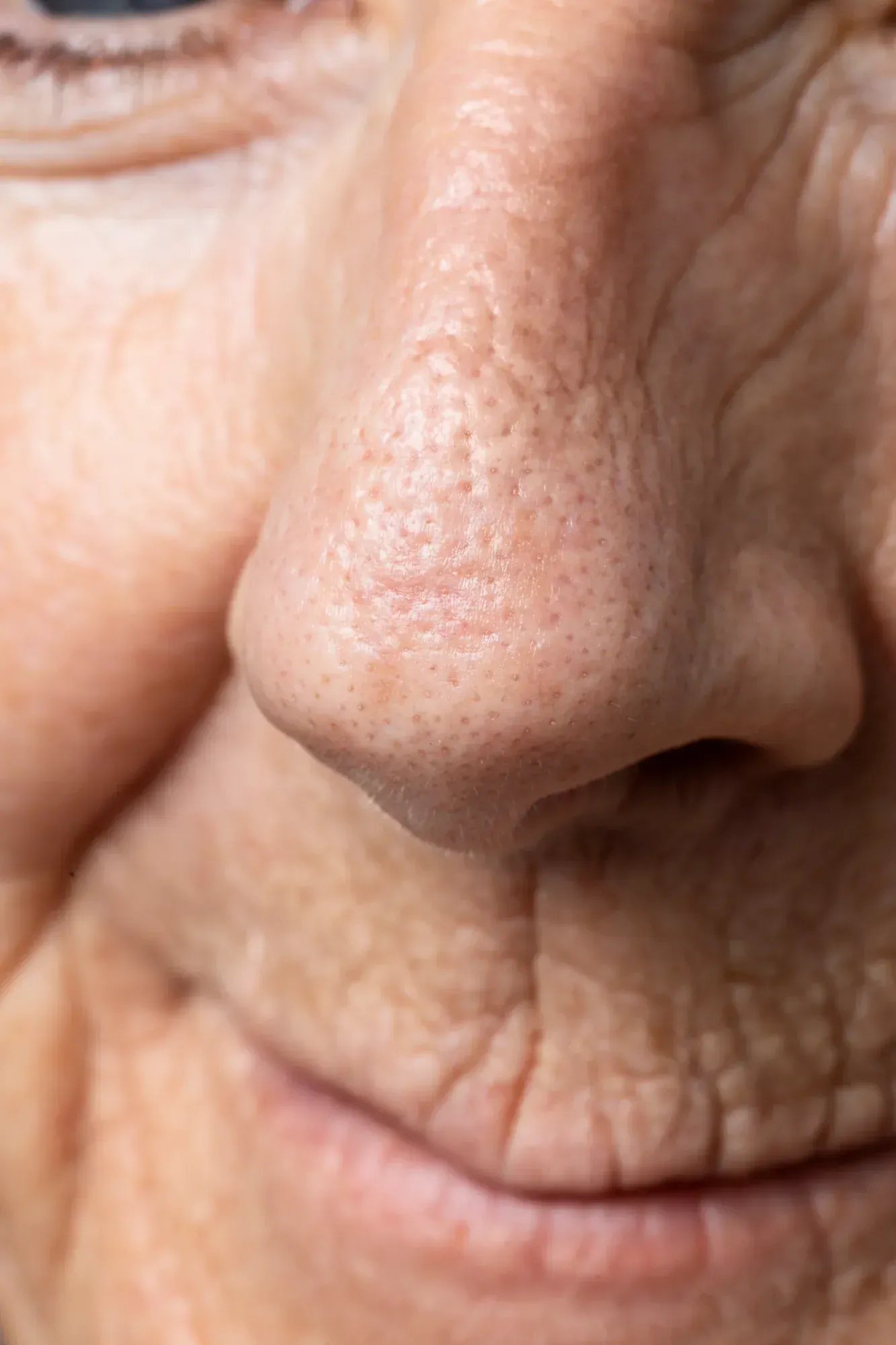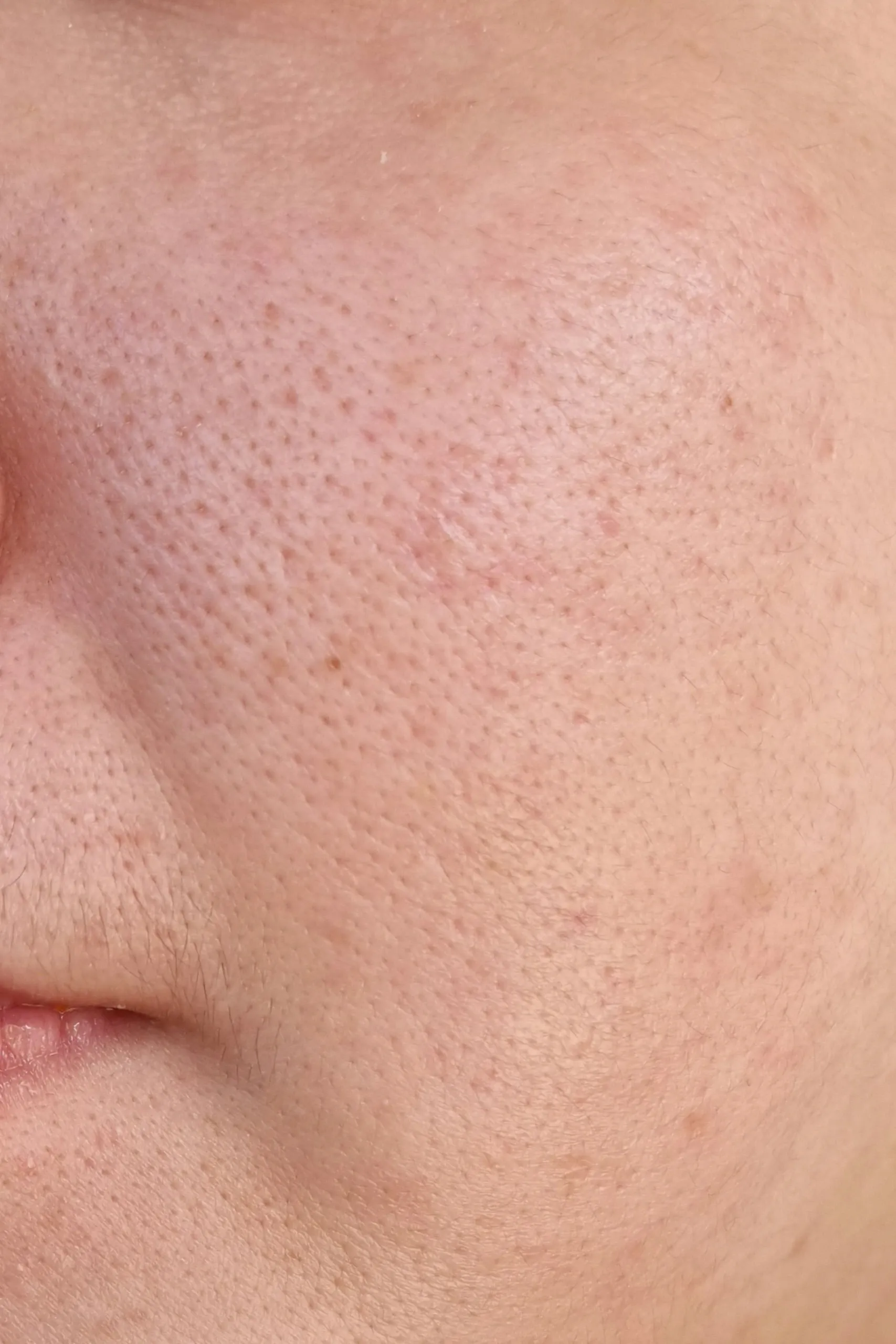

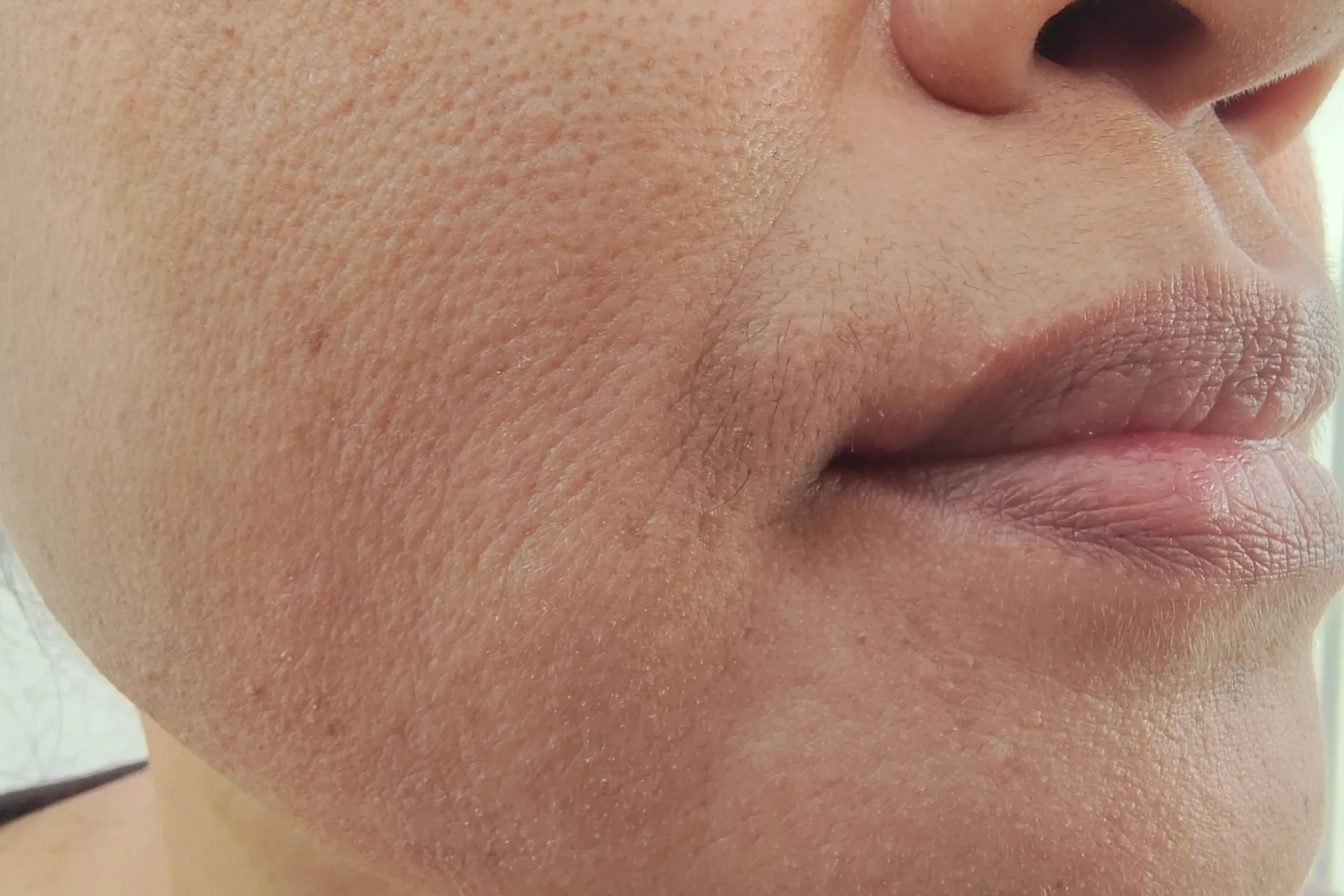

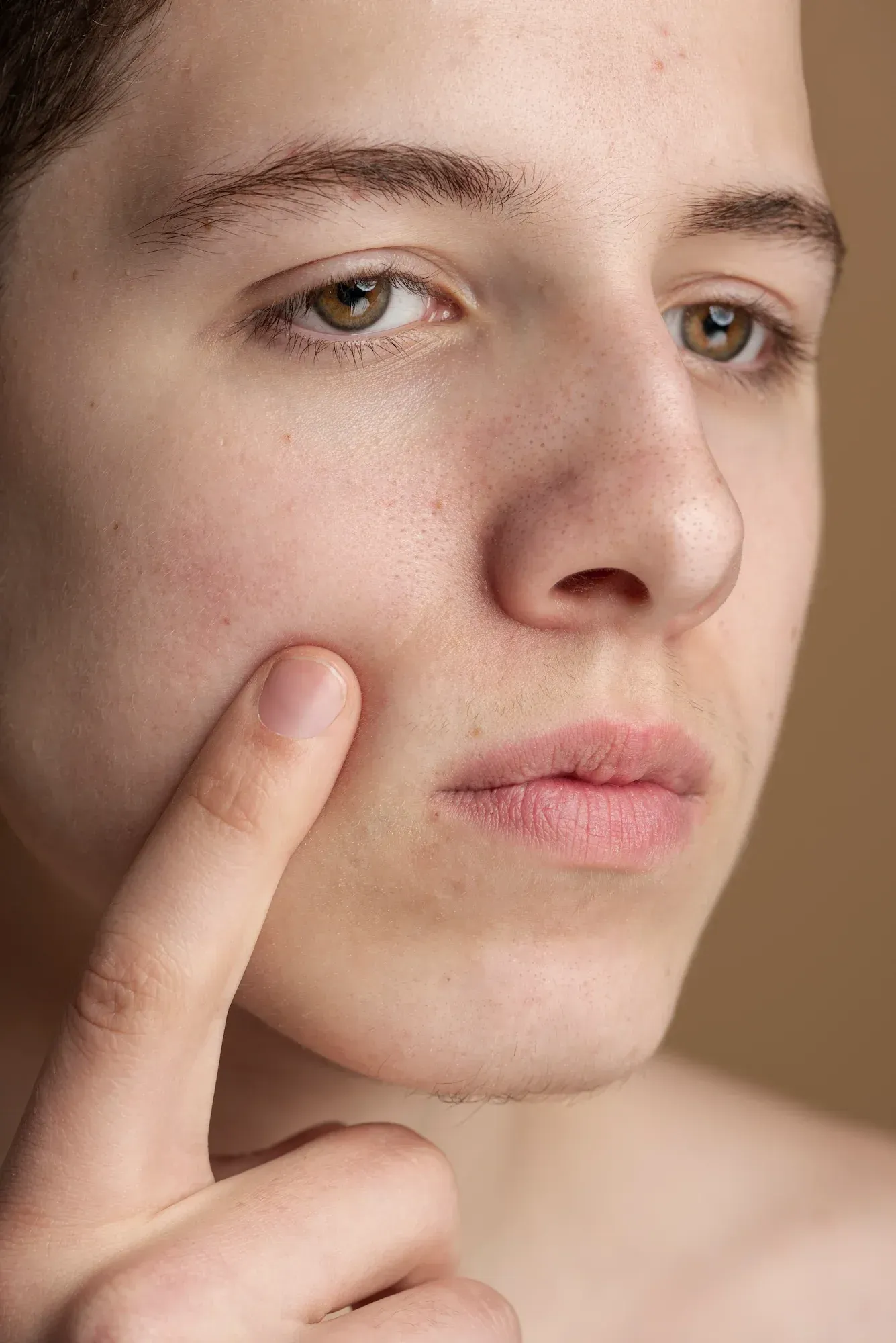
Three biological factors drive visible pore size: sebum output, sun-related collagen loss, and age-related skin laxity. Sebaceous glands attached to each follicle produce oil that must move upward through the pore opening. When output is high, the walls of the pore stretch, and the opening looks larger to the eye. Pore diameter typically becomes more noticeable between the mid-20s and 40s as cumulative UV exposure builds up.
According to the American Academy of Dermatology, pore appearance is influenced by oil production, genetics, sun damage, and skin thinning with age. Ultraviolet exposure gradually breaks down the collagen and elastin around each pore opening, and without that supportive scaffolding the pore edge loses its round shape and starts to sag.
Collagen-inducing treatments like microneedling address this by creating controlled microchannels at pore openings, which triggers a healing response that rebuilds collagen and elastin around each follicle. Combined with a consistent regimen of medical-grade skincare, this reinforces pore walls and improves how light reflects off the skin surface.