

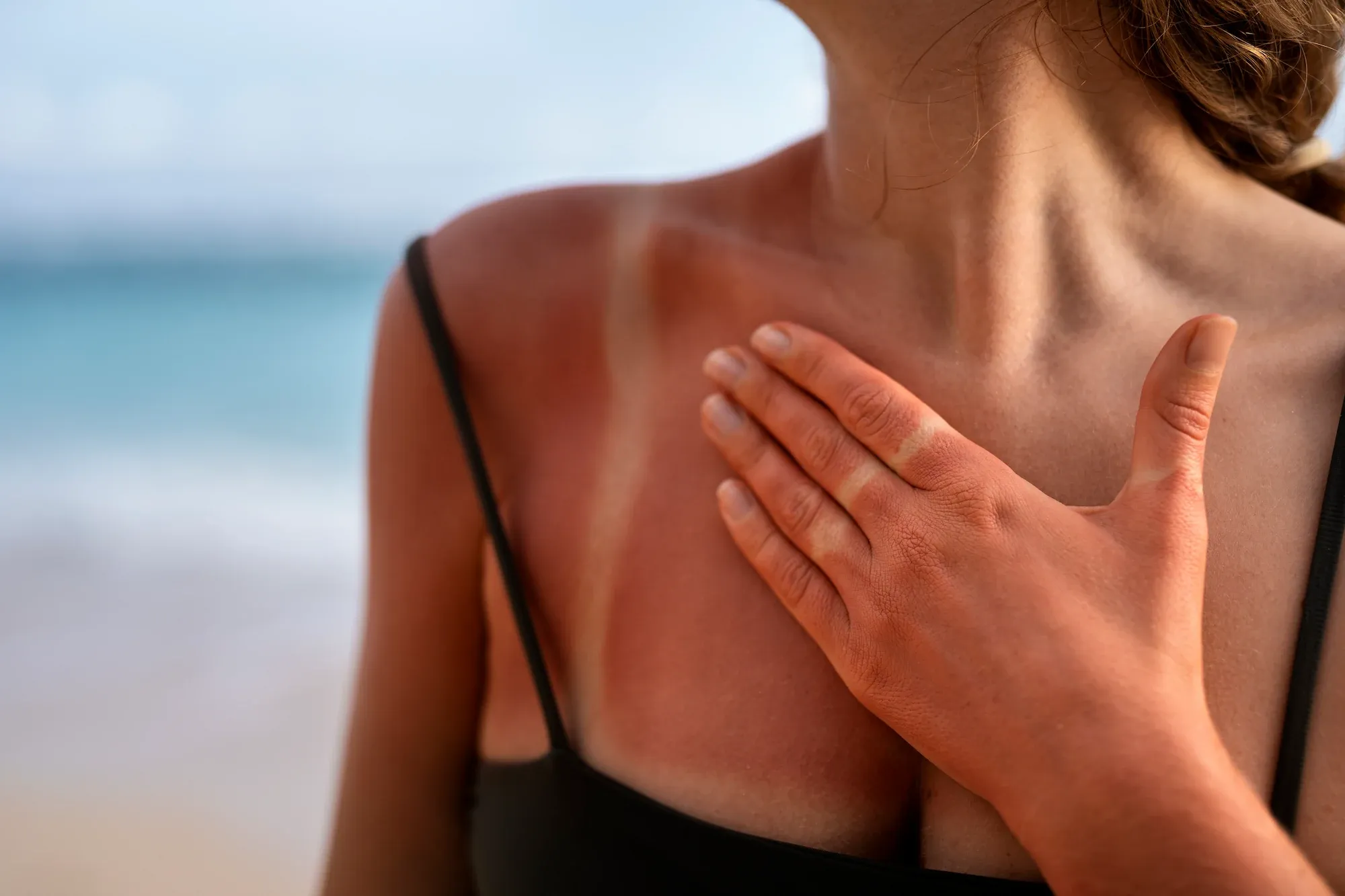

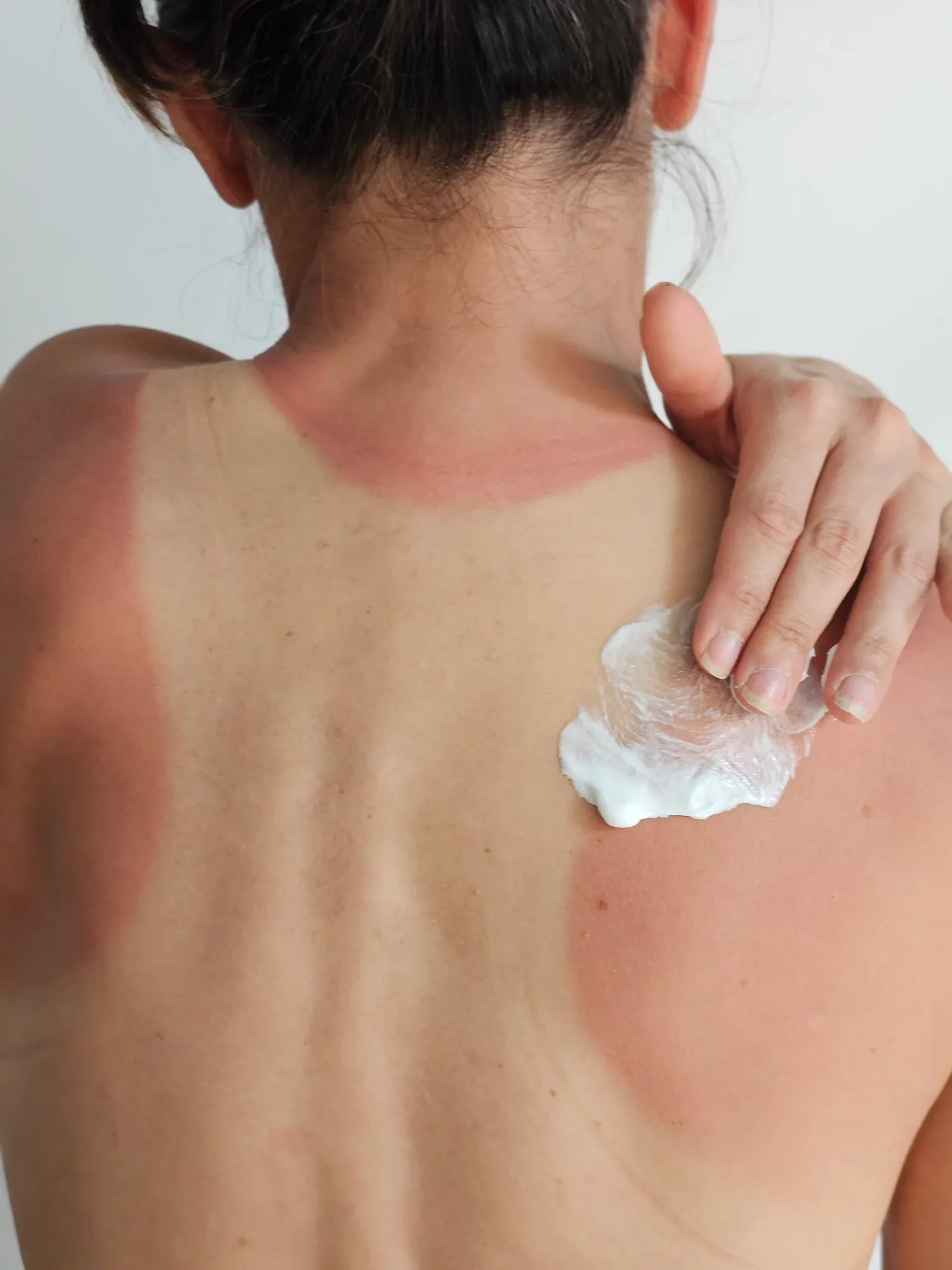
Ultraviolet radiation penetrates the epidermis and dermis, generating reactive oxygen species that damage cellular DNA, degrade collagen and elastin fibers, and stimulate melanocytes to overproduce pigment in patchy patterns. Approximately 80-90% of the visible signs traditionally attributed to aging are actually caused by cumulative UV exposure rather than the calendar. The American Academy of Dermatology recommends regular skin checks because chronic sun exposure is also the leading modifiable risk factor for skin cancer.
This oxidative cascade breaks down the organized collagen scaffold in the dermis, replacing it with disorganized elastotic material. The result is the loose, wrinkled, mottled appearance patients recognize as photoaging. Melanocytes, meanwhile, produce melanin in uneven bursts, leaving behind flat brown or gray spots called solar lentigines.
Prevention is far more effective than treatment. Daily broad-spectrum sunscreen, protective clothing, and wide-brimmed hats can slow further damage. Once photoaging has developed, targeted treatments such as medical-grade skincare and microneedling can help reverse pigmentation and rebuild collagen from within.