What Is OMT? A Patient's Guide to Osteopathic Manipulative Therapy
OMT stands for Osteopathic Manipulative Therapy, a gentle hands-on treatment that DOs use to ease pain, restore mobility, and support the body's ability to heal. Here is what it is, how it feels, and what it treats.
Introduction: three letters, one very hands-on kind of medicine
When a new patient sits down in my office and I mention OMT, the most common response is a polite nod followed by, "I'm sorry, what does that stand for?" You are not alone if that is your reaction. OMT is one of the most useful tools in medicine that most people have never heard of, and I think that is a shame.
OMT stands for Osteopathic Manipulative Therapy. You will also see it written as OMM, which stands for Osteopathic Manipulative Medicine. The two are used interchangeably. Both refer to a hands-on treatment that a physician trained as a DO uses to diagnose and treat problems in the muscles, joints, connective tissues, and nervous system.
DO stands for Doctor of Osteopathic Medicine. DOs are fully licensed physicians in the United States, just like MDs. We prescribe medication, order imaging, perform procedures, and manage the same conditions. The difference is that during medical school we also spent hundreds of hours learning how to use our hands as a diagnostic and therapeutic tool. That is what makes OMT possible. To learn more about the profession, the American Osteopathic Association is a great place to start.
What is OMT? Osteopathic manipulative therapy, defined
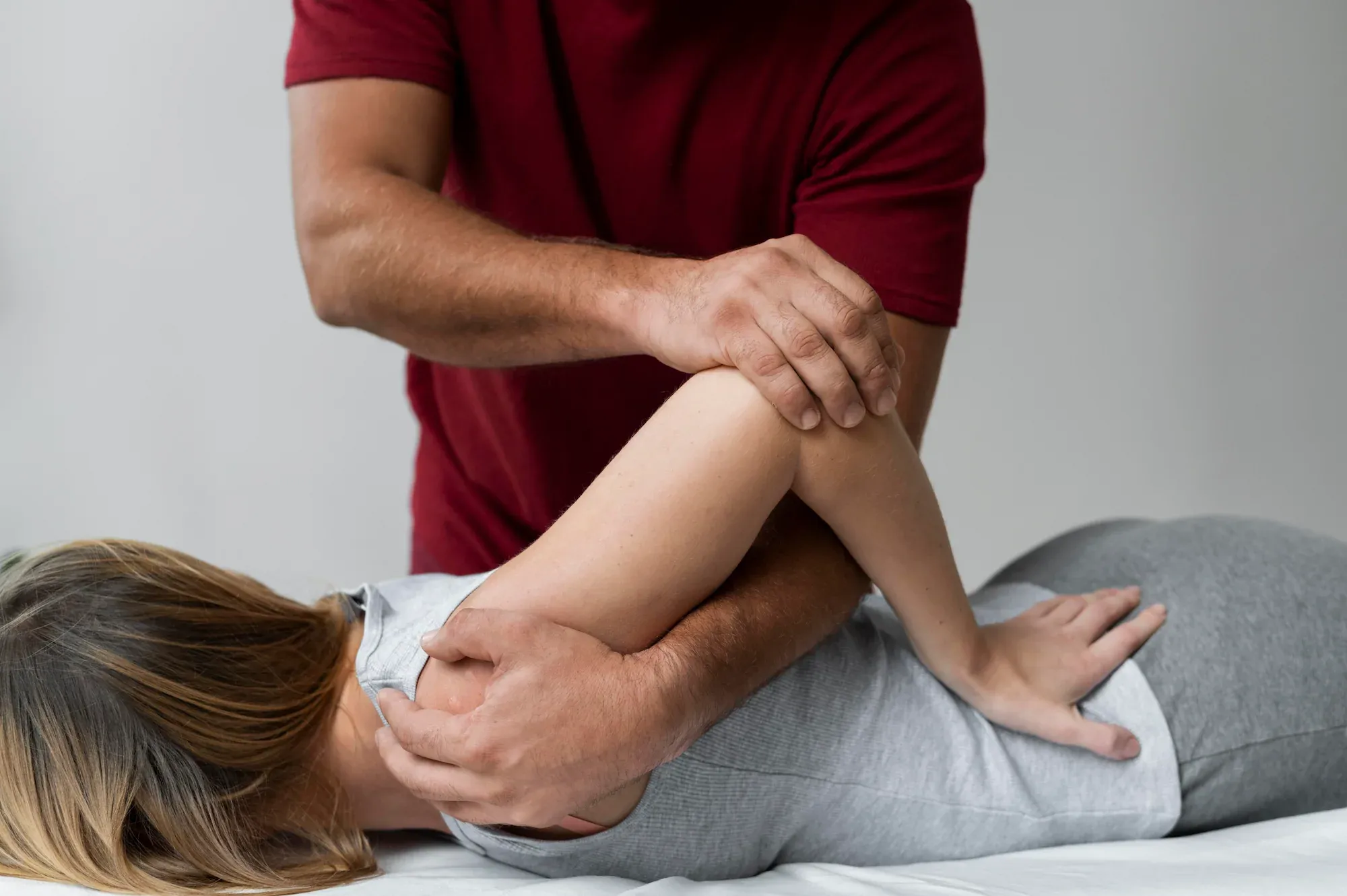
OMT is a set of hands-on techniques a DO uses to move muscles and joints through stretching, gentle pressure, and controlled positioning. The goal is to reduce pain, restore range of motion, improve circulation, and help the body's own systems work better together.
A core principle of osteopathic medicine is that the body is a self-regulating unit, and structure and function are connected. When a joint is not moving well, or a muscle is chronically tight, other systems feel it. Breathing gets shallower. Sleep gets worse. A tension headache settles in behind the eyes. OMT addresses those structural restrictions directly, with our hands, so the rest of the body can do what it does best.
Think of OMT as a diagnostic conversation between my hands and your body. I feel for areas of restriction, tenderness, and asymmetry, and then I use specific techniques to release what I find. Some techniques are so gentle patients ask me if I have started. Others feel more like a firm stretch. None of it should be painful.
How OMT is different from chiropractic care and physical therapy
This is the question I get asked most often. Chiropractors, physical therapists, and DOs who practice OMT all work with the musculoskeletal system, but the training, philosophy, and typical approach are meaningfully different.
Chiropractic care. Doctors of Chiropractic (DCs) complete a four-year chiropractic program focused on the spine and nervous system. Their signature technique is the high-velocity, low-amplitude (HVLA) thrust, the quick adjustment that often produces an audible pop. HVLA is effective for certain problems and is one tool a DO can also use, but it is not the primary way most osteopathic physicians practice OMT.
Physical therapy. Physical therapists (PTs) hold a Doctor of Physical Therapy degree and specialize in rehabilitation. Their toolkit centers on exercise progression, movement retraining, manual therapy, and modalities like ultrasound or electrical stimulation. PT is outstanding for building strength and progressing a patient back to sport or work over weeks and months.
OMT with a DO. A DO is a physician first. When I use OMT, I am working within a full medical evaluation. I can order the MRI, prescribe the medication, refer to a specialist, and treat the tissue restriction all in one visit. I lean on gentle techniques like myofascial release, muscle energy, and counterstrain, and I choose based on what your body is telling me. If you need progressive exercise, I send you to a PT. OMT is one part of comprehensive care, not a standalone practice.
The main techniques I use: myofascial release, muscle energy, counterstrain
There are more than a dozen recognized OMT techniques, but three form the backbone of what I offer at Resurgent Health. Each is gentle, each has a specific purpose, and each is backed by solid clinical experience and research.
Myofascial release
Fascia is the connective tissue that wraps around every muscle, organ, and nerve. When fascia becomes tight after injury, surgery, or poor posture, it can pull on structures far from the original problem. Myofascial release uses sustained, gentle pressure into the restricted tissue until it softens on its own. Patients often describe it as a slow, deep stretch. It is a favorite for chronic tension, old scar tissue, and diffuse pain that does not sit in one joint.
Muscle energy technique
Muscle energy is an active technique, which means you help. I position the joint at a specific angle, then ask you to gently push against my hand for a few seconds. When you relax, the joint moves further into its restricted range. It is remarkably effective for restoring motion in the spine, ribs, pelvis, and shoulders, and patients like feeling themselves participate in the change.
Counterstrain
Counterstrain is my favorite technique for tender points, those specific spots that are painful to press. I find the tender point, then position the surrounding tissue in a way that shortens the tight muscle and takes tension off the point. We hold that position for about ninety seconds. When I bring you back to neutral, the tender point is usually significantly better. It is exceptionally well tolerated by patients with acute pain, older adults, and anyone nervous about being touched.
What OMT treats
OMT is not a cure-all, but the list of conditions it can meaningfully help is longer than most patients expect. A 2014 meta-analysis by Franke and colleagues in BMC Musculoskeletal Disorders concluded that OMT produces clinically relevant reductions in pain and improvements in function for patients with acute and chronic nonspecific low back pain [1]. The NIH National Center for Complementary and Integrative Health also recognizes spinal manipulation as a reasonable option for common musculoskeletal pain.
In my Fargo practice, these are the conditions I treat most often with OMT:
- Back pain, both acute after a lift or fall and chronic pain built up over years
- Neck pain and stiffness, including whiplash and desk-related tension
- Sciatica, shooting leg pain from nerve root or pelvic dysfunction
- Tension and cervicogenic headaches originating in the neck and upper back
- Joint pain in the shoulders, hips, knees, and ribs, especially with restricted motion
- Postural strain from long hours of sitting, driving, or repetitive work
- Pregnancy-related back and pelvic pain, using techniques safe for expectant mothers
- Recovery after minor injuries like sprains, strains, and rib subluxations
OMT can also help with conditions that surprise patients, like sinus congestion, certain kinds of dizziness, and some digestive complaints where a restricted diaphragm is part of the story [2].
What a session actually feels like
Your first OMT visit with me is a full medical appointment. We talk about your history, goals, and current symptoms. I do a standard physical exam, looking at your posture, testing range of motion, and feeling for tenderness and asymmetry.
Treatment happens on a padded table in comfortable clothing. Depending on what I find, you may be lying face up, face down, sitting, or side-lying. Sessions typically run thirty to forty-five minutes. I explain each technique before I use it and check in about pressure throughout. Most patients feel relaxed by the end. You might feel a little sore for a day, similar to a good workout, but you should not feel worse than when you came in.
OMT is performed by a DO. Only osteopathic physicians receive the full formal training in these techniques during medical school.
Who is a good candidate
Most adults are good candidates for OMT. It is especially useful for people who prefer to try conservative, medication-sparing options first, patients who cannot tolerate certain medications, older adults who want gentle care, athletes managing overuse injuries, and pregnant women dealing with musculoskeletal aches.
There are situations where OMT is not appropriate or where I modify my approach carefully. Active fractures, unstable spinal conditions, severe osteoporosis in some cases, active infections, and certain cancers are examples of when we either avoid manipulation entirely in that area or select only the gentlest techniques. That is exactly why OMT is delivered by a physician: the same visit that includes hands-on treatment also includes the medical judgment to know when not to use it.
Frequently asked questions
What is OMT?
OMT is Osteopathic Manipulative Therapy, a hands-on treatment a DO uses to move muscles and joints and relieve pain, restricted motion, and other musculoskeletal problems. It combines stretching, gentle pressure, and controlled positioning tailored to what your body needs.
What does OMT stand for?
OMT stands for Osteopathic Manipulative Therapy. You will also see OMM, which stands for Osteopathic Manipulative Medicine. The two are used interchangeably. Both are performed by a Doctor of Osteopathic Medicine, or DO.
Is OMT the same as chiropractic?
No, though there is overlap. Chiropractors focus on spinal adjustments, especially the HVLA thrust. A DO is a full medical physician who uses a broader toolkit including gentle techniques like myofascial release, muscle energy, and counterstrain, integrated into complete medical care.
What conditions does OMT treat?
OMT is used most often for back pain, neck pain, sciatica, headaches, and joint pain in the shoulders, hips, knees, and ribs. It can also help postural strain, pregnancy-related pain, and recovery after minor injuries. There is strong evidence supporting its use in acute and chronic low back pain.
Does OMT hurt?
OMT should not hurt. Most techniques are gentle enough that patients ask if the treatment has started. You may feel a firm stretch or brief pressure, and you may be a little sore the day after, similar to how you feel after exercise. Sharp pain during treatment is not expected, and I adjust technique or pressure right away if it happens.
How many OMT sessions will I need?
It depends on the problem. Acute issues like a strained back or a new episode of neck pain often improve substantially in one to three visits. Chronic conditions that have been building for years may need a series of four to six sessions, sometimes with occasional maintenance visits after that. I will give you a straightforward estimate at your first appointment and adjust based on how you respond.
Who can perform OMT?
OMT is performed by a Doctor of Osteopathic Medicine, a DO. DOs complete the same rigorous medical training as MDs and add hundreds of additional hours learning hands-on diagnosis and treatment during medical school and residency. Only a licensed DO is trained and credentialed to perform the full range of OMT techniques.
Is OMT covered by insurance?
Because OMT is a medical service delivered by a physician, most major insurance plans cover it, including Medicare. Coverage details vary by plan, so we will verify your benefits before your first visit and give you a clear picture of what to expect. If you are uninsured or have a high-deductible plan, we offer transparent self-pay pricing so you can plan ahead.
Ready to try OMT in Fargo
If you have been dealing with back pain, neck stiffness, headaches, sciatica, or joint pain that has not responded to the usual advice, hands-on osteopathic care may be exactly what you have been missing. I would be honored to help you feel like yourself again. Learn more about OMT in Fargo, ND and schedule your first appointment with me at Resurgent Health.
References
- PubMed (PMID: 24886265) - Franke H, Franke JD, Fryer G. Osteopathic manipulative treatment for nonspecific low back pain: a systematic review and meta-analysis. BMC Musculoskelet Disord. 2014.
- PubMed (PMID: 32491642) - Roberts A, Harris K, Outen B, et al. Osteopathic Manipulative Medicine: A Brief Review of the Hands-On Treatment Approaches and Their Therapeutic Uses. StatPearls. 2023.